My Breville Barista Express: good coffee, and the maths
Convenience, latte art and the maths I'd do before buying an espresso machine.
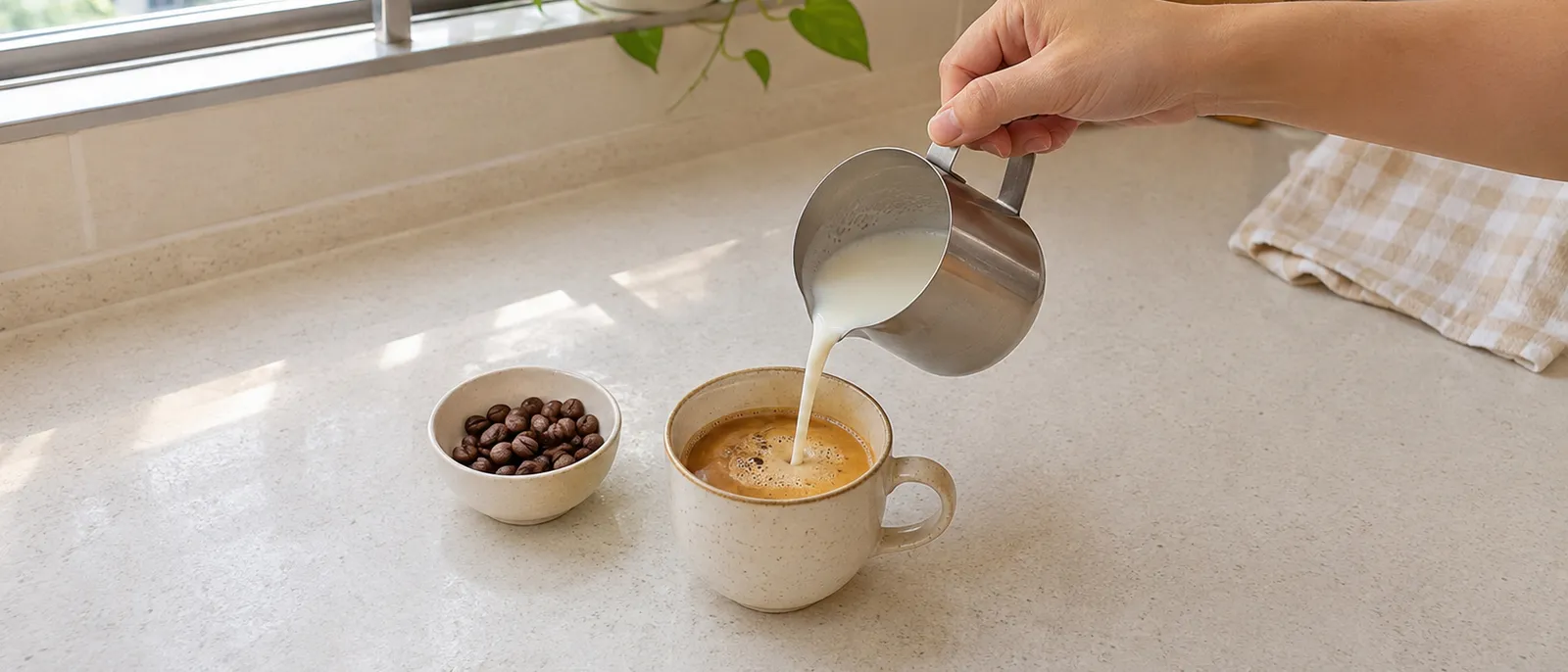
I use a Breville Barista Express to make coffee at home. For me, the quality of the coffee is part of the value.
The money side is fairly simple: replace a $5 bought coffee with a $2 homemade one, 20 times a month, and there’s $60 left in the budget. The machine still needs to be paid for, though.
In a Reddit discussion about Tiong Bahru’s café scene, some commenters talked about making their own coffee at home. I agree with them. I’ve done my own sums below for someone considering a machine like mine.
Why I use the Barista Express
I think it’s good value for making better coffee at home. The Barista Express has a built-in grinder, temperature control and a manual steam wand, so the grinder is included in the machine cost.
The convenience matters too. I can make a cup in my own kitchen without a separate trip or a takeaway queue, and choose the beans, strength and amount of milk I want.
And there’s the satisfaction of latte art. Learning to texture the milk and pour a heart into your own cup is part of the enjoyment. Small thing, but it makes making coffee more fun.
It’s still hands-on: grinding, tamping, steaming the milk and cleaning up. I’d want to enjoy that process before buying a machine.
What goes into a $2 cup
These are illustrative quantities and costs for a double espresso with 150ml of dairy milk, not a record of my own spending:
| Ingredient | Cost per cup |
|---|---|
| 20g of beans, assuming $50 per kg | $1.00 |
| 150ml of milk at $6.70 for 2 litres | About $0.50 |
FairPrice listed the 2-litre Meiji milk at $6.70, plus a $0.10 bottle deposit, when checked on 15 November 2026. The milk portion works out to 50.25 cents before that deposit.
For the sums below, I’m budgeting $2 per homemade cup before the machine. That leaves roughly 50 cents beyond the beans and milk for electricity, water, cleaning supplies, filters and some wastage; it’s a planning allowance, not a measured running-cost bill.
Use your own beans and milk prices if they’re different. And compare against a milk coffee of similar size and strength that you’d buy, with any extra charges included in its price.
Count the cups you stop buying
At an assumed $5 bought cup and our $2 home budget, the difference is $3 each time.
| Cups replaced per month | Saved per month | Saved over 12 months |
|---|---|---|
| 8 | $24 | $288 |
| 20 | $60 | $720 |
| 40 | $120 | $1,440 |
These are savings before buying the machine, assuming the same number of replacements each month. Allow for holidays and days when you wouldn’t have bought coffee anyway.
Count the purchases you skip. An extra homemade cup after your usual café stop doesn’t save $5.
The maths I’d do before buying
For someone buying now, Harvey Norman listed the black Barista Express BES870 at $798 when checked on 15 November 2026. I’m using that as the example purchase price; substitute the full amount on your receipt, including any extras.
$798 ÷ $3 saved per cup = 266 replaced coffees.
At 20 a month, that’s during month 14. In the first 12 months, the $720 running-cost saving still leaves you $78 short of the machine’s price; after 24 months, you’d be $642 ahead, assuming the $2 budget holds and there are no extra repairs or upgrades.
If I were buying one now, I’d want it to replace enough bought coffees to make those numbers work, and I’d expect to keep using it well beyond the break-even point. If I’d only use it twice a month, I wouldn’t buy it for the savings.
But I’d also count the convenience and the pleasure of making the coffee, including practising latte art. Those don’t have a neat dollar figure, and they still matter to me.
The café catch-up with a friend can stay.